UFRN initiates cannabis cultivation for scientific research
The Federal University of Rio Grande do Norte (UFRN) has become the first institution in Brazil authorized by Anvisa to carry out controlled cultivation and processing of cannabis for scientific research. The planting takes place in an indoor system at the Brain Institute (ICe-UFRN), focusing on studies on epilepsy, autism, pain, sleep, and other neurological disorders

Published on 06/07/2026
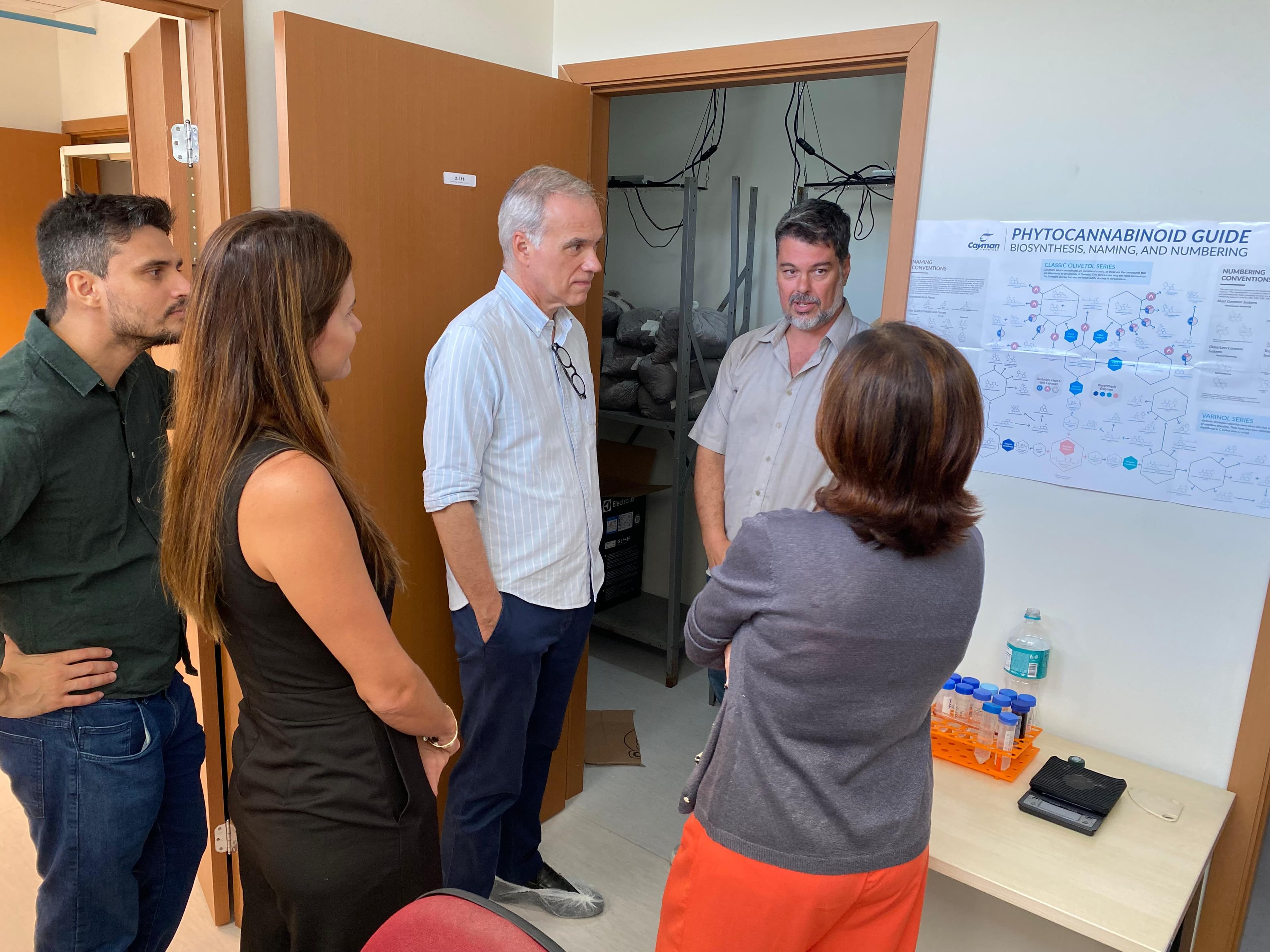
The Federal University of Rio Grande do Norte (UFRN) has become the country's first institution to obtain authorization from the National Health Surveillance Agency (Anvisa) for cannabis cultivation for scientific research.
The authorization allows the university to import, store, germinate seeds, and cultivate the plant in a controlled system, indoors.
On Friday morning, the 13th, Rector José Daniel Diniz Melo visited the laboratory of the Brain Institute (ICe-UFRN), responsible for projects evaluating the efficacy and safety of combinations of phytocannabinoids.
Currently, ICe-UFRN maintains seedlings planted with different series of phytocannabinoids. Professor Claudio Queiroz explained that the process involves planting, pruning for plant cloning, flowering, and subsequent extraction of compounds, which will be analyzed in scientific research in the fields of epilepsy, tinnitus, autism, sleep disorders, and pain.
For Rector Daniel Diniz, the moment represents an institutional milestone. “After going through a rigorous process with Anvisa, seeing the start of cannabis cultivation happening at the Brain Institute represents an important step for the advancement of research conducted at UFRN and a historic milestone for Brazilian science,” he said.
In addition to the rector, the visit was attended by the Vice-Rector for Research (Propesq-UFRN), Silvana Zucolotto; the director of the Innovation Agency (Agir-UFRN), Jefferson Oliveira; and the Chief of Staff of the Rectorate, Magda Pinheiro.
History
In 2020, UFRN began the process for the release of controlled cultivation and processing of cannabis with Anvisa.
ICe-UFRN conducts preclinical projects to evaluate the efficacy and safety of combinations of phytocannabinoids in managing signs and symptoms associated with neurological and psychiatric disorders.
UFRN's progress also aligns with national debates on regulation, science, and innovation in the sector, topics that will be highlighted at the Brazilian Medicinal Cannabis Congress. The event features the Agro and Tech Cannabis module, dedicated to discussions on controlled cultivation, technologies applied to indoor and outdoor planting, genetics, traceability, good agricultural practices, automation, environmental control, and the development of inputs for the cannabis production chain.
The module brings together researchers, agronomists, agricultural technology experts, startups, and industry representatives to present practical experiences, regulatory models, and technical solutions applied to the Brazilian context.
The congress is open for submission of scientific papers, allowing researchers to present studies related to cultivation, technological innovation, therapeutic applications, and cannabis regulation in Brazil.
Source: Williane Silva – Ascom/Reitoria